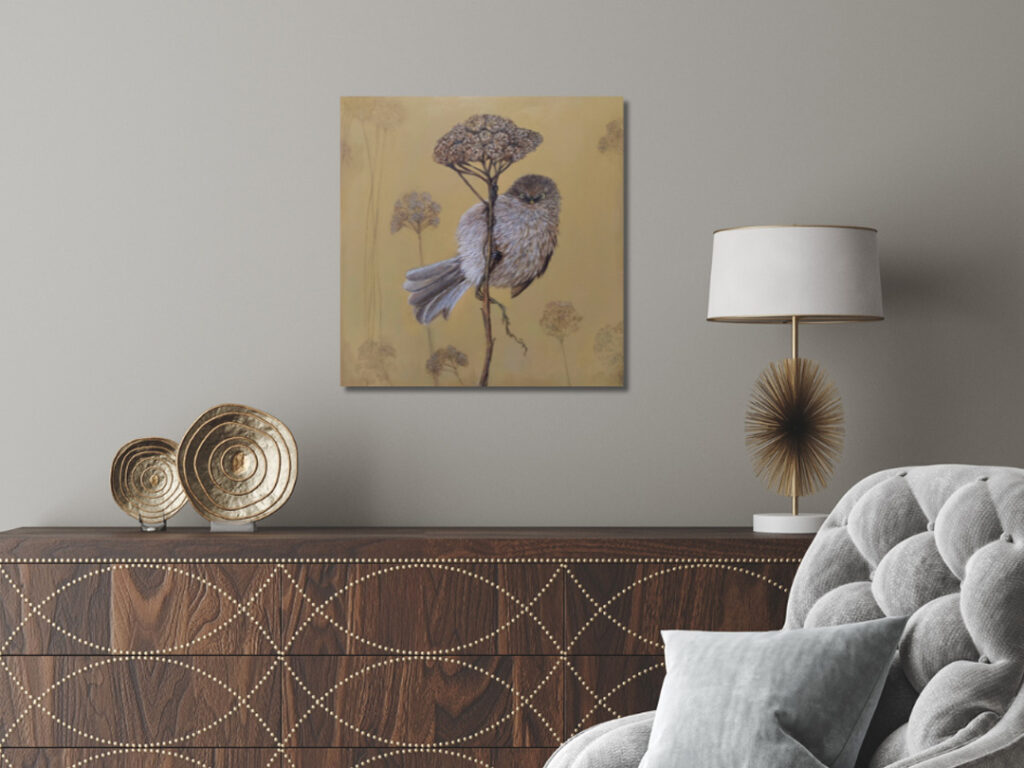
Walk into a room and you can feel it right away.
Some spaces feel cluttered. Some feel restless. And some… just let you breathe a little deeper without even thinking about it.
That feeling isn’t random. It’s something we create, often without realizing it, through what we choose to surround ourselves with.
As a wildlife artist, I think about this a lot. Not just how a piece looks on a wall, but how it feels to live with it.
Because the images we bring into our homes don’t just decorate a space. They quietly influence how we settle into it.
Why Nature Feels So Different
There’s a reason stepping into the woods feels nothing like walking through a parking lot.
Even when it’s just an image, nature has a way of softening the noise in our minds. Studies have shown that looking at natural scenes can lower stress and reduce mental fatigue, but honestly, most of us feel that instinctively.
An elk standing quietly in tall grass.
A wide Alberta sky stretching out over open land.
A bear with her cubs, completely at ease in their surroundings.
There’s no urgency in those moments. No pressure. And your body picks up on that.
When those kinds of images are part of your everyday space, they act like a quiet signal: you can slow down here.
The Energy Animals Bring Into a Space
What draws me to painting animals isn’t just how they look, it’s the feeling of being near them. They don’t need to explain anything. They just are.
There’s a steadiness to them. Strength, without chaos.
A bear doesn’t rush unless it needs to.
A horse moves with power, but not tension.
That kind of grounded energy changes the feeling of a room. It’s subtle, but it’s there.
When you hang wildlife art, you’re not just adding something visual. You’re bringing in that sense of calm awareness, something we don’t always give ourselves.
Your Home Affects Your Nervous System
Our homes do a lot more work than they used to.
They’re where we work, rest, reset, and try to find a bit of quiet in between everything else.
If a space feels busy or overstimulating, it’s hard to fully relax in it. But small changes can shift that:
Softer, natural color palettes.
Materials that feel organic, wood, linen, canvas.
One intentional focal point instead of filling every wall.
I always come back to this idea: not everything needs to compete for attention. Sometimes one strong, calming piece is enough.
Why Eye Contact Matters
One thing I hear often from collectors is how much they connect with the eyes.
There’s something very grounding about the steady gaze of an animal. It’s not demanding, it’s just present.
When a piece captures that moment well, it creates a quiet kind of connection. Something that holds your attention without overwhelming you.
It turns the artwork into more than just something you pass by. It becomes something you pause with.
A Different Kind of Daily Reset
We talk a lot about routines, morning habits, exercise, taking breaks—but we don’t often think about what we’re looking at all day.
That matters more than we think.
If your environment feels chaotic, your mind tends to follow. If it feels calm and intentional, your body responds to that too.
Nature-based artwork can act like a reset point. Not dramatic, not distracting, just steady and consistent.
Something you come back to without even realizing it.
Creating a Calm Corner
If you want to try this in your own space, start small.
Pick one area and let it stay simple:
Keep the colors soft and natural.
Use warm, gentle lighting.
Add texture with natural materials.
Choose one piece of art that feels grounding to you.
It doesn’t need to be perfect. The goal is just to create a place where you can exhale a little.
Why This Matters
There’s already enough noise in the world outside.
Your home doesn’t need to add to it.
For me, nature belongs on the walls because it brings things back to a quieter, steadier place. It’s a reminder of something slower, more grounded, and sometimes that’s exactly what we need at the end of the day.
If you’re drawn to that kind of feeling, you can explore my available work here:
And if you’d like a closer look behind the scenes, I share new pieces, stories, and early access with my studio circle.
Frequently Asked Questions
Does wildlife art really reduce stress?
Yes. Studies show that viewing images of nature, including wildlife and landscapes, can lower stress, improve focus, and help restore mental balance.
Where should calming artwork be placed in a home?
Living rooms, bedrooms, home offices, and entryways are ideal spaces for grounding, peaceful artwork. These areas benefit most from imagery that invites stillness.
What kind of art creates a peaceful feeling?
Artwork that features natural elements, soft color palettes, and steady, mindful subjects, like wildlife or animal artwork, tends to create the most calming atmosphere.
